OTF Deployment With a Single Edge — More Practical for Everyday Use
I’ve looked at both the single and double edge versions of this OTF, and for most people doing actual utility work with a knife, the single edge makes more sense. It’s easier to sharpen, more practical for slicing tasks, and carries fewer legal complications in areas that specifically restrict double-edge blades. The OTF mechanism is the same on both — fast, linear, and reliable.
The blade is slightly shorter than the double-edge version at 3.5 inches, and the overall collapsed length is 5.5 inches. If you’re comparing these two side by side, the differences are minor — choose based on whether you want a single or double edge.
Who This OTF Knife Is For
This is a good fit for someone who wants the OTF deployment style for everyday carry or utility use and prefers the versatility of a single-edge blade. It handles typical cutting tasks — cordage, food prep at a campsite, general utility work — better than a double edge, which can be awkward for push-cutting tasks.
It also tends to be the better choice if you’re newer to OTF knives and want something that behaves more like a familiar single-edge folder in terms of how you use the blade. Experienced collectors and EDC users who have a specific reason for wanting the OTF style will find this a solid, reasonably priced option. Check local laws before carrying — automatic knives have varying legal status across states.
Is This the Right Choice for You?
Choose this OTF knife if you want:
- Out-the-front deployment specifically
- A single-edge blade that’s more practical for utility tasks
- Easier maintenance and sharpening compared to a double edge
- A slightly more compact OTF than the double-edge version
Consider something else if you need:
- A double-edge blade — see the OTF double-edge version (ID 21834)
- A lighter, more compact carry — the side-opening automatics weigh less
- Fewer legal restrictions — manual folding knives are regulated less strictly
How It Actually Works
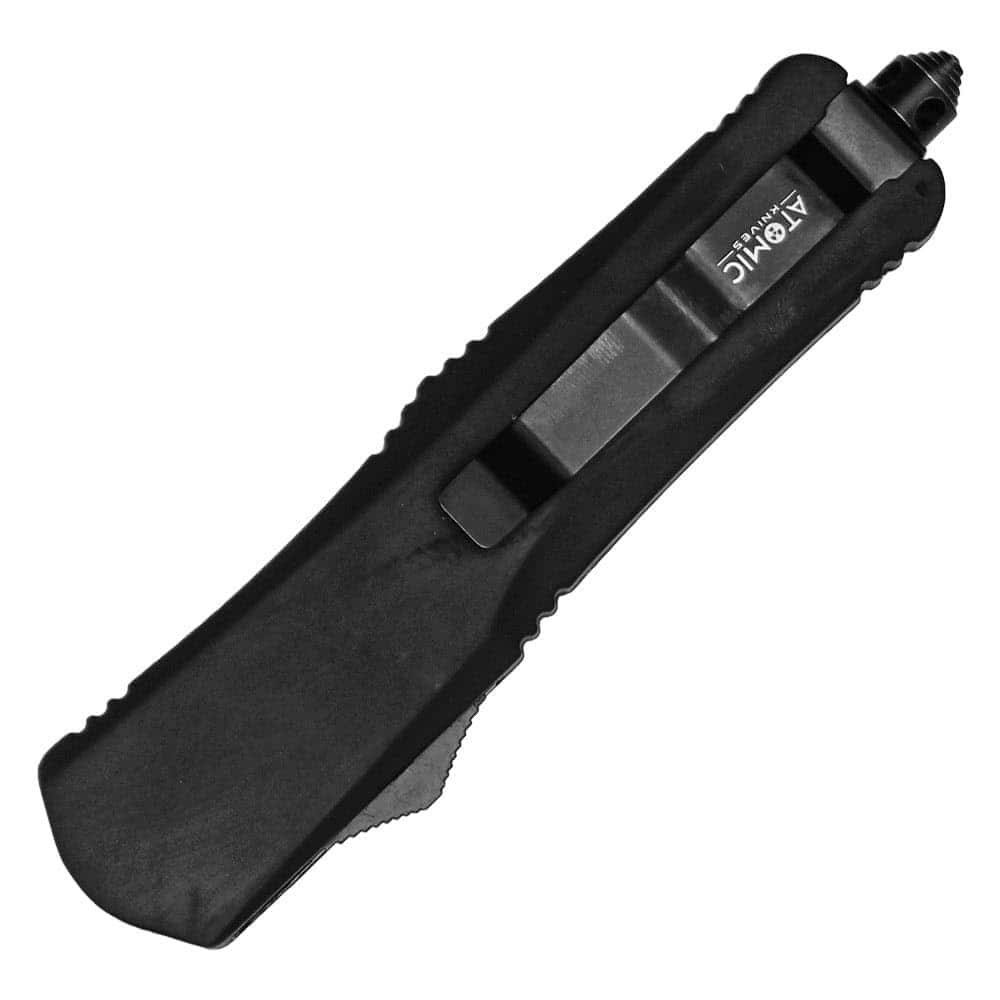
The OTF mechanism works through a single slide on the handle spine. Push the slide toward the tip and the blade shoots forward out of the handle. Pull the slide back and it retracts into the handle. The motion is straight and linear — no rotation, no lateral swing. It’s a mechanically different experience from a traditional folder, and for people who like that action, it’s a compelling option.
The single-edge blade at 3.5 inches is a practical working length. Single-edge blades have a flat spine and a sharpened edge, which makes them better suited for the kinds of cuts most people actually make — slicing, detail work, and tasks where you want to apply pressure through the blade’s spine. The premium steel construction holds an edge well under regular use.
At 0.7 lbs, the weight is the same as the double-edge version — the OTF mechanism itself accounts for most of that, not the blade design. That’s slightly heavier than the side-opening automatics, which is worth knowing if weight is a priority for your carry setup.
Quick Comparison: How Does This OTF Knife Stack Up?
| Feature |
This OTF Single Edge |
OTF Double Edge |
Side-Opening Automatic |
Manual Folding Knife |
| Deployment Style |
Out-the-front ✓ |
Out-the-front ✓ |
Side rotation |
Manual rotation |
| Blade Edges |
Single edge ✓ |
Double edge |
Single edge ✓ |
Single edge ✓ |
| Ease of Sharpening |
Easier ✓ |
More complex |
Easier ✓ |
Easier ✓ |
| Collapsed Length |
5.5 inches |
5.75 inches |
4.5 inches ✓ |
Varies ✓ |
| Weight |
0.7 lbs |
0.7 lbs |
0.4 lbs ✓ |
Varies ✓ |
| Best For |
OTF carry, everyday utility |
OTF carry, double edge |
Lighter EDC |
General use, fewer restrictions |
Practical Details
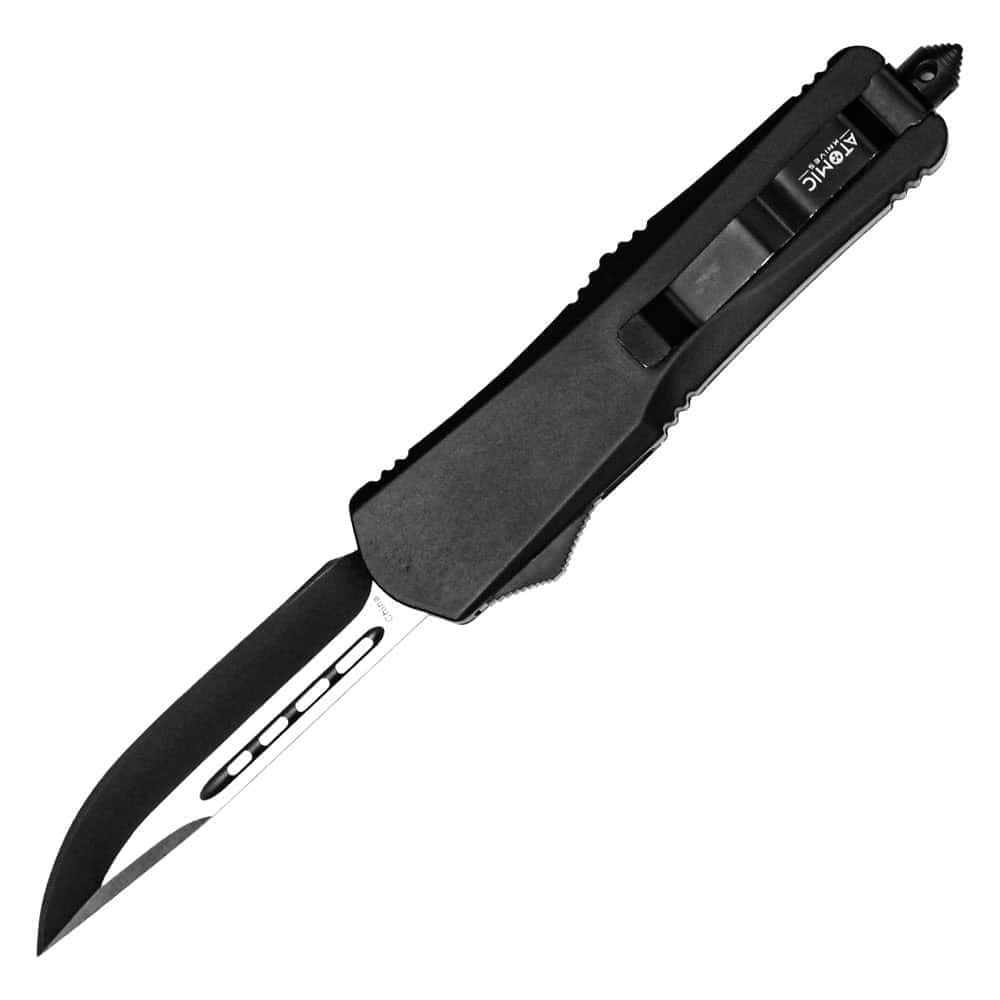
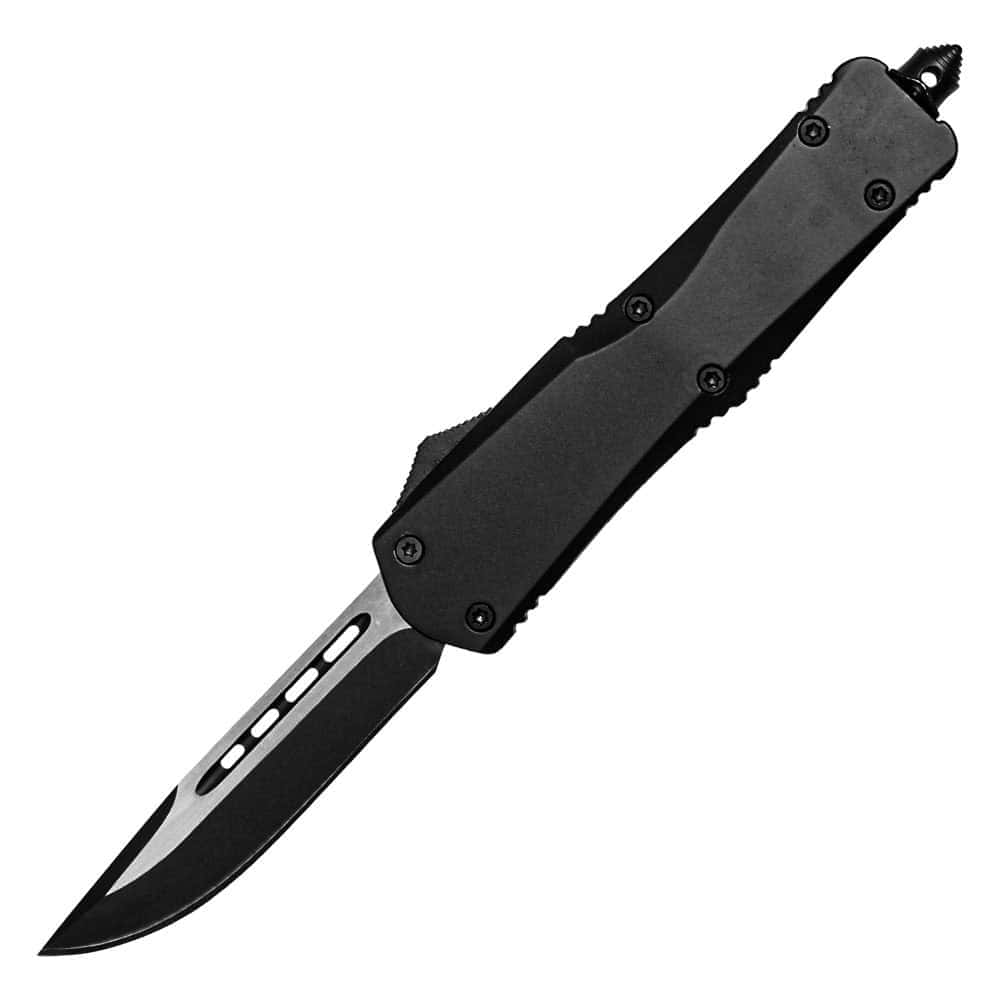
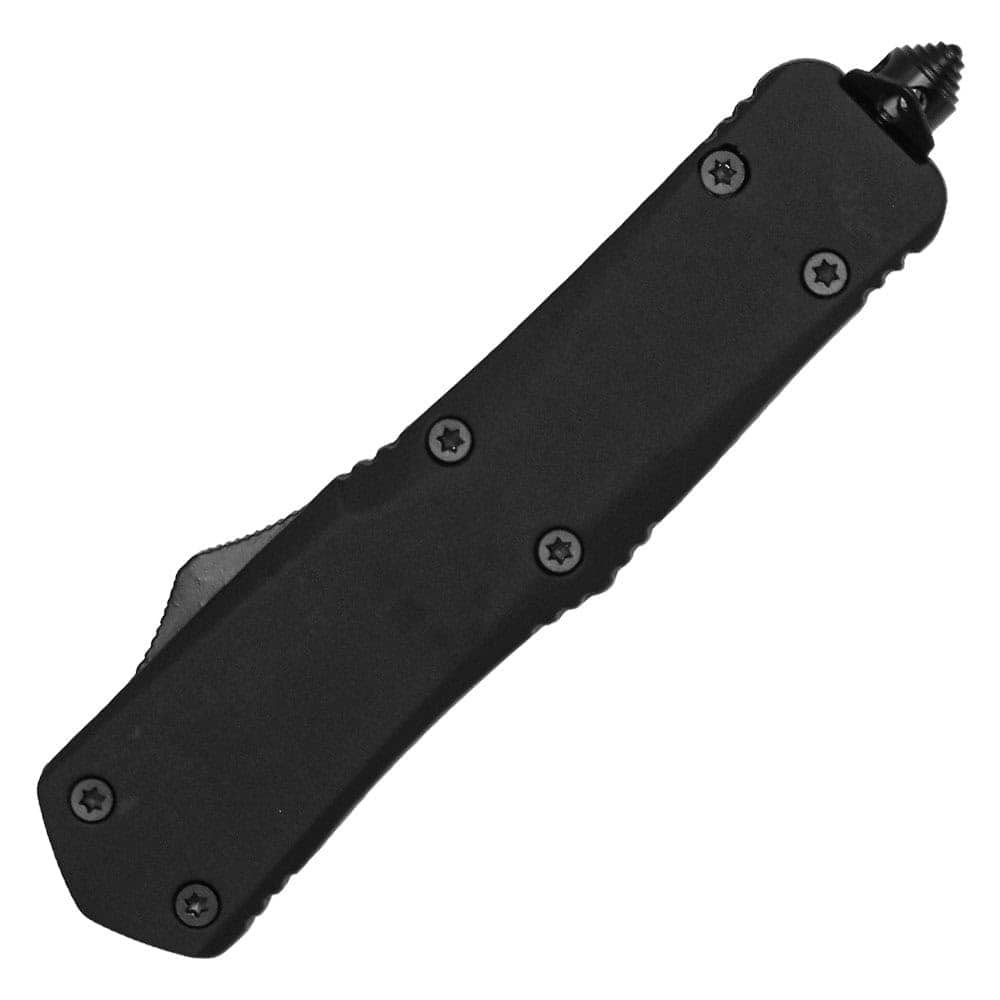
Overall length: 9 inches open, 5.5 inches collapsed. Blade: 3.5 inches, single edge, premium steel. Weight: 0.7 lbs. Dimensions: 9″ x 1.25″. Color: black. Important: OTF automatic knives are subject to the same legal restrictions as other automatic knives. Check your state and local laws before purchasing — regulations vary significantly by location.
A reliable OTF automatic with a practical single-edge blade — fast deployment, clean retraction, and a versatile blade design for everyday carry and utility use.
Frequently Asked Questions
What’s the practical difference between single and double edge on an OTF knife?
A single-edge blade has one sharpened edge and a flat or unsharpened spine. This makes it more versatile for everyday tasks — you can apply pressure through the spine when needed, and it’s easier to sharpen with standard tools. A double-edge blade has both edges sharpened, which some buyers prefer for specific applications but which adds legal complexity in some areas and can be harder to maintain. For most everyday utility use, single edge is the more practical choice.
How does the slide mechanism feel during deployment and retraction?
On a quality OTF knife, the slide should feel smooth and positive in both directions. Deployment should be snappy — the spring mechanism launches the blade forward with authority. Retraction should be equally clean, pulling the blade back into the handle without dragging. If you ever notice stiffness in the mechanism, a small amount of appropriate lubricant at the slide channel usually resolves it.
Is this knife smaller than the double-edge version?
Slightly. The single-edge version is 9 inches overall (vs. 9.5 inches) and 5.5 inches collapsed (vs. 5.75 inches). The blade is 3.5 inches vs. 3.75 inches. The weight is the same at 0.7 lbs. The differences are minor — if size is your deciding factor, both are comparable. Most people choose between these based on single vs. double edge preference rather than size.
Are there any legal considerations specific to single-edge vs. double-edge knives?
In most jurisdictions, the automatic mechanism itself (OTF or side-opening) is the primary legal factor for knife laws, not the number of edges. However, some states and localities do have specific restrictions on double-edge or “dagger-style” blades. The single-edge version is generally subject to fewer restrictions on that specific point — though the automatic mechanism still carries its own legal considerations that vary by location. Check both factors when researching your local laws.


Reviews
There are no reviews yet.