A Solid Starting Point for Knife Throwing
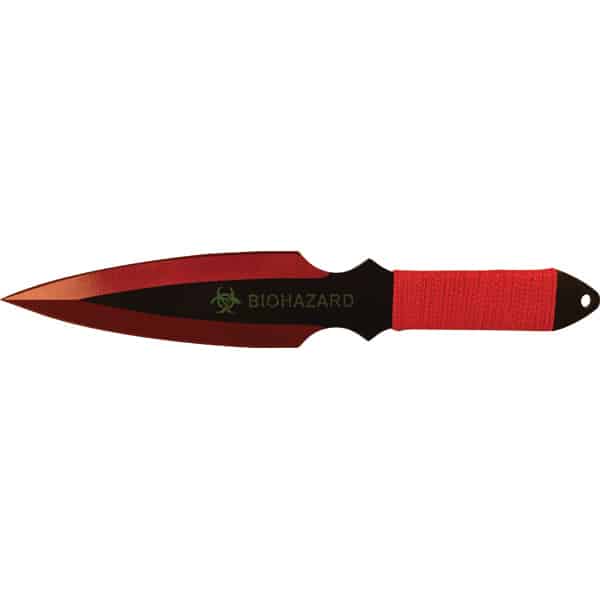
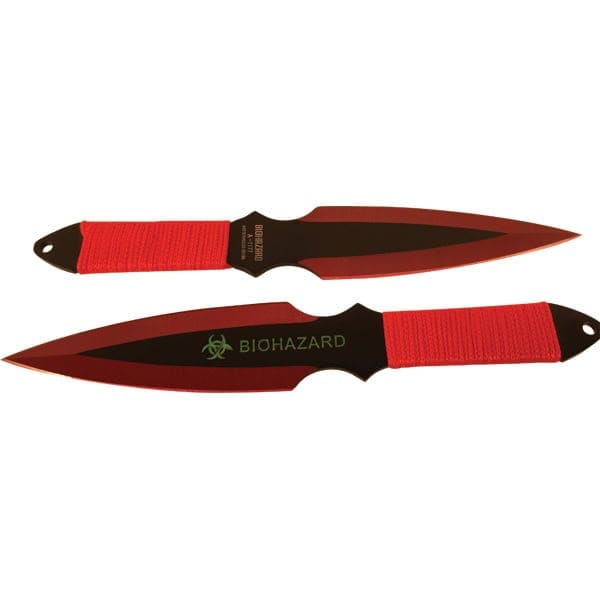
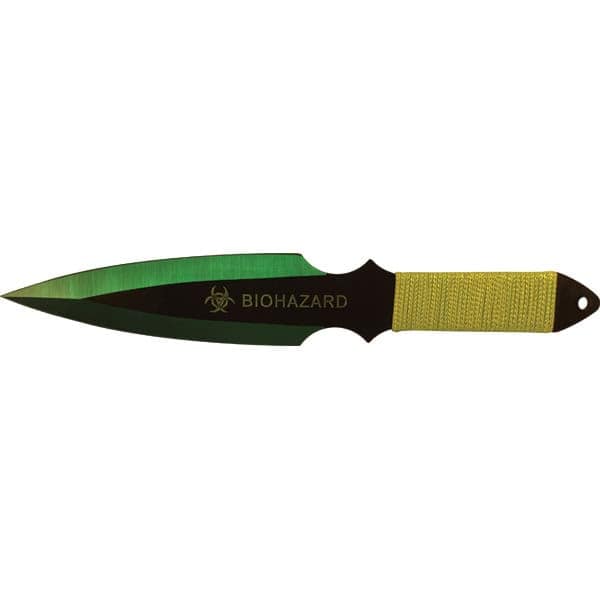
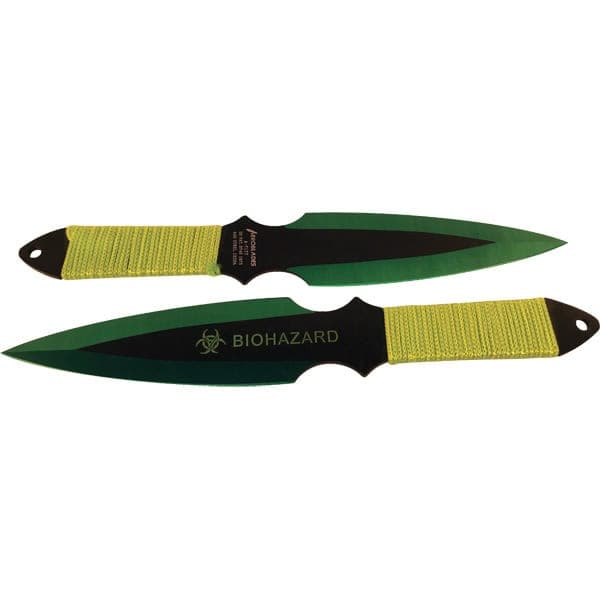
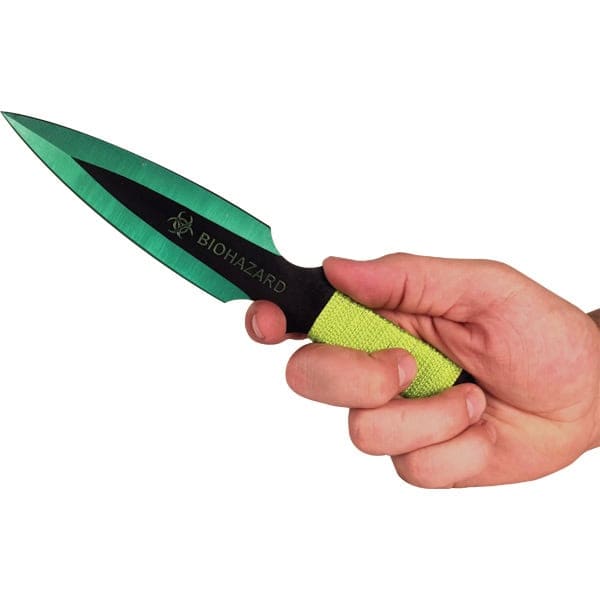
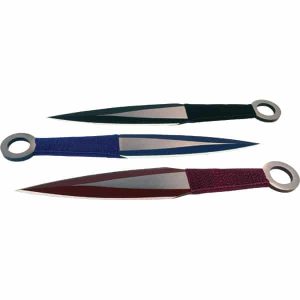
Knife throwing is a skill that takes repetition, and having two matching blades is more useful than one — you can throw both before walking to the target, which keeps practice moving. The BioHazard set is built around that idea: two identical 9-inch 440 stainless steel knives that fly consistently because they’re matched in weight and balance.
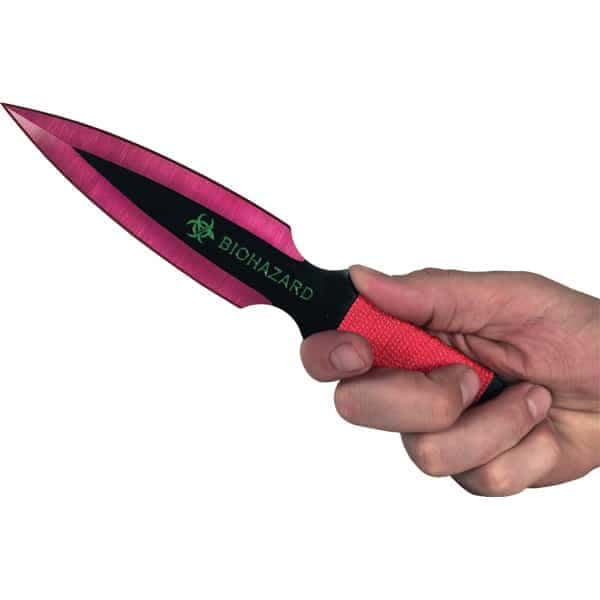
At 9 inches, these are in the middle range for throwing knives. Shorter knives require less distance to complete a rotation; longer knives need more. Nine inches is a reasonable starting length for learning proper grip and release at distances in the 10-15 foot range, which is where most beginners start.
Who This Set Is For
This set is aimed at beginners working on the basics — learning the half-spin, full-spin, and no-spin techniques — and intermediate throwers who want a dependable practice set without investing heavily. The 440 stainless construction handles repeated impact into a wooden target board without the tips bending as quickly as softer steel options.
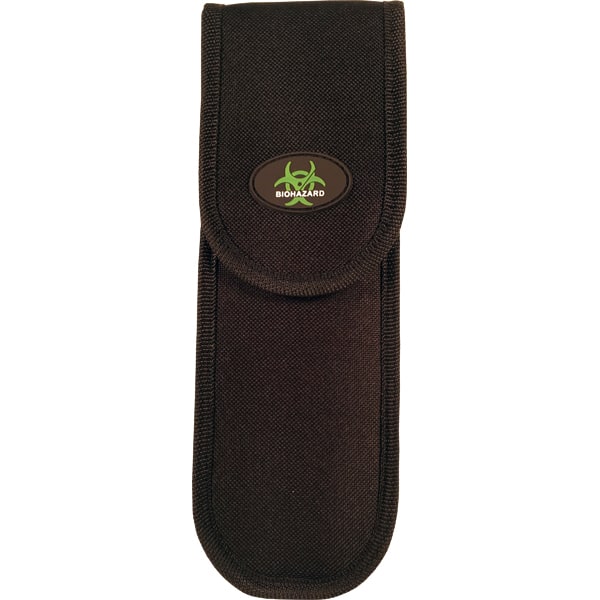
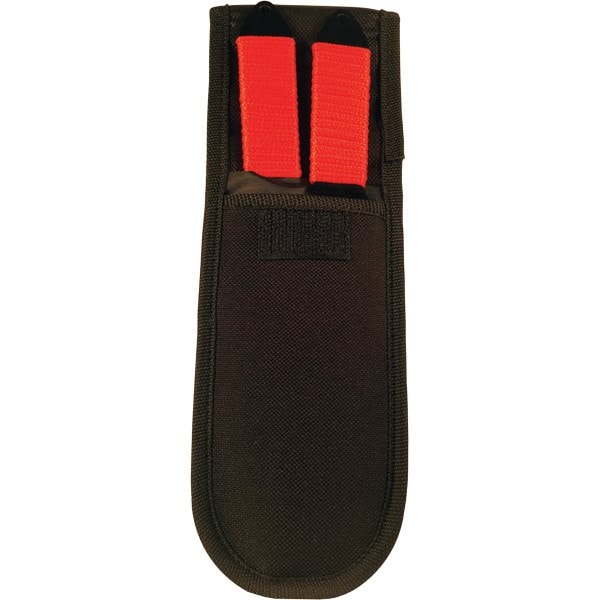
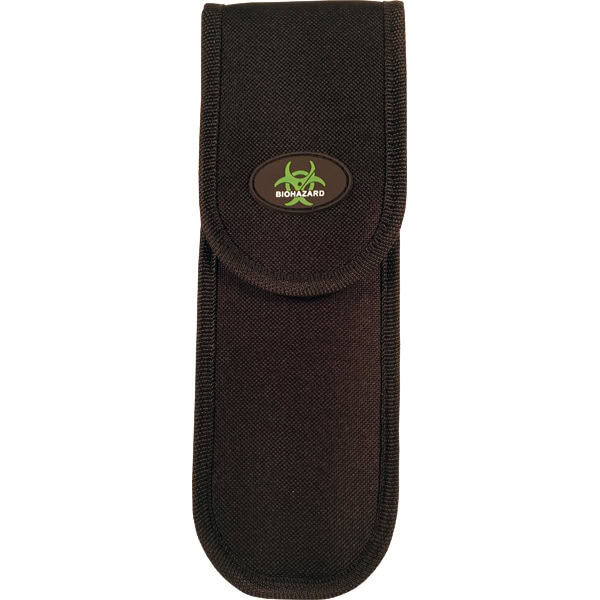
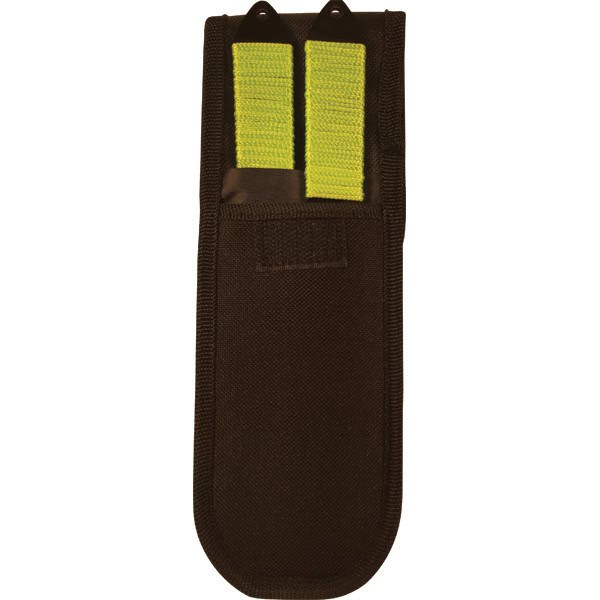
It’s also useful as a second set if you already own throwing knives and want matching spares to reduce retrieval time during practice sessions. The sheath pouch makes transport easy whether you’re heading to a backyard target or an outdoor range.
Is This the Right Choice for You?
Choose this BioHazard set if you want:
- A beginner-to-intermediate practice set with consistent balance across both blades
- 440 stainless steel that holds up to regular target throwing
- A compact set with a included sheath for organized storage and transport
- A low-cost entry point into knife throwing without sacrificing basic build quality
Consider something else if you need:
- Competition-grade or precision-balanced throwing knives — this is a practice set, not a competition set
- A blade length shorter than 9 inches for very close-range throws
- A single large knife rather than a matched pair
What Makes a Good Practice Throwing Knife
The main thing that separates a usable throwing knife from a poor one is consistency — both in how it flies and how it holds up over time. Inconsistent weight or balance between two supposed “matching” knives makes it harder to develop repeatable technique, because you’re adjusting for the tool rather than refining your throw. These two knives are manufactured to the same spec, so they behave the same way in the air.
440 stainless steel is a practical choice for throwing knives. It’s hard enough to resist bending at the tip on impact, but not so brittle that it chips. The steel takes some maintenance — wiping down after use and occasional light oiling — but holds up well under regular practice conditions.
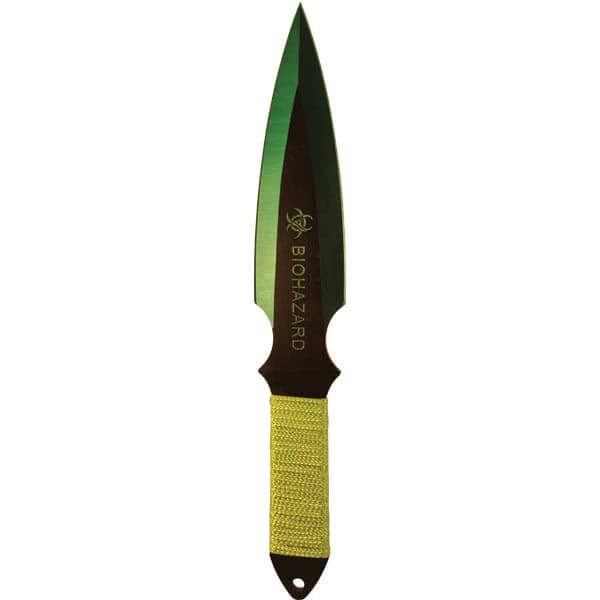
The BioHazard graphic is applied to the blade. The handle and blade are a single-piece (or full-tang) construction typical for throwing knives, which removes the weak point of a separate handle that could separate on impact.
Quick Comparison: Throwing Knife Options
| Feature |
BioHazard 2-Piece Set (9″) |
Short Throwing Knives (6-7″) |
Long Throwing Knives (12″+) |
Competition Throwing Knives |
| Best Skill Level |
✓ Beginner to Intermediate |
Beginner (close range) |
Intermediate to Advanced |
Advanced / Competition |
| Typical Practice Distance |
✓ 10-15 ft range |
7-10 ft range |
15-20 ft range |
Varies by discipline |
| Steel Quality |
440 Stainless |
Varies widely |
Varies widely |
✓ High-grade tool steel |
| Knives per Set |
✓ 2 |
Often sold individually |
Often sold individually |
Varies |
| Includes Storage |
✓ Sheath pouch |
Varies |
Varies |
Varies |
| Best For |
Practice, learning technique |
Close-range learning, kids’ intro sets |
Developing longer-distance technique |
Tournaments and serious sport practice |
Practical Details
Overall length: 9 inches per knife. Material: 440 stainless steel. Set weight: 0.7 lbs (both knives). Includes sheath pouch for both knives. Available in Red and Green. These are intended for sport throwing at appropriate targets — always use a proper backstop and follow safe handling practices. Check local laws regarding blade carry and use before purchasing.
Two matched blades, solid steel, and a sheath to keep them organized — it’s a practical starting kit for learning knife throwing without overcomplicating the entry point.
Frequently Asked Questions
What’s a good starting distance for throwing these?
For 9-inch throwing knives, most beginners start at around 10 feet for a half-rotation throw. As you develop consistency, you move back to 15 feet for a full rotation. The goal is to find the distance where the knife completes the right number of rotations to land point-first. Starting closer and moving back methodically is the standard approach, and 9 inches is a good length for learning in that 10-15 foot range.
What kind of target should I use?
Soft wood is ideal — pine and similar woods give you a surface the blade can stick into without requiring a lot of force. A cross-section log or stacked lumber works well. Avoid hardwoods, metal, or concrete, which will damage the tips quickly. A proper backstop behind the target is important to catch any knives that miss or bounce. Most throwers build a simple wood target stand as their first setup.
Is 440 stainless steel good for throwing knives?
440 stainless is a reasonable choice for practice throwing knives. It has enough hardness to resist tip deformation on repeated impact into wood, and it’s more corrosion-resistant than high-carbon steels, which means less maintenance. It’s not the steel that competition throwers typically prefer — those tend toward higher-grade tool steels — but for learning technique on a backyard target, 440 stainless holds up well and is a good fit for this price range.
What does “beginner to intermediate” mean for a throwing knife?
It mainly refers to balance and weight. Beginner-grade knives are designed for basic learning but may not have the precision balance of higher-end options. Intermediate means the knife is consistent and balanced enough to develop real technique, but isn’t engineered to competition tolerances. This set falls in that range — consistent enough to learn on and practice with, without the premium price of sport competition knives.

Reviews
There are no reviews yet.