All-Metal Construction, Built Heavier Than Most
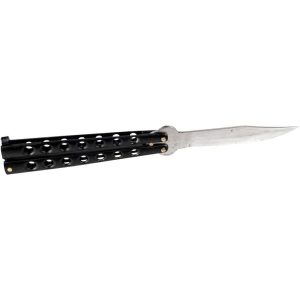
Butterfly knives come in a wide range of quality. This one is built toward the heavier end of the spectrum — all-metal construction with a 5-inch serrated blade that opens to 11 inches overall. If you’ve handled flimsy balisong knives with plastic or composite handles, the difference in feel here is immediately apparent. The whole knife has real weight and solidity to it.
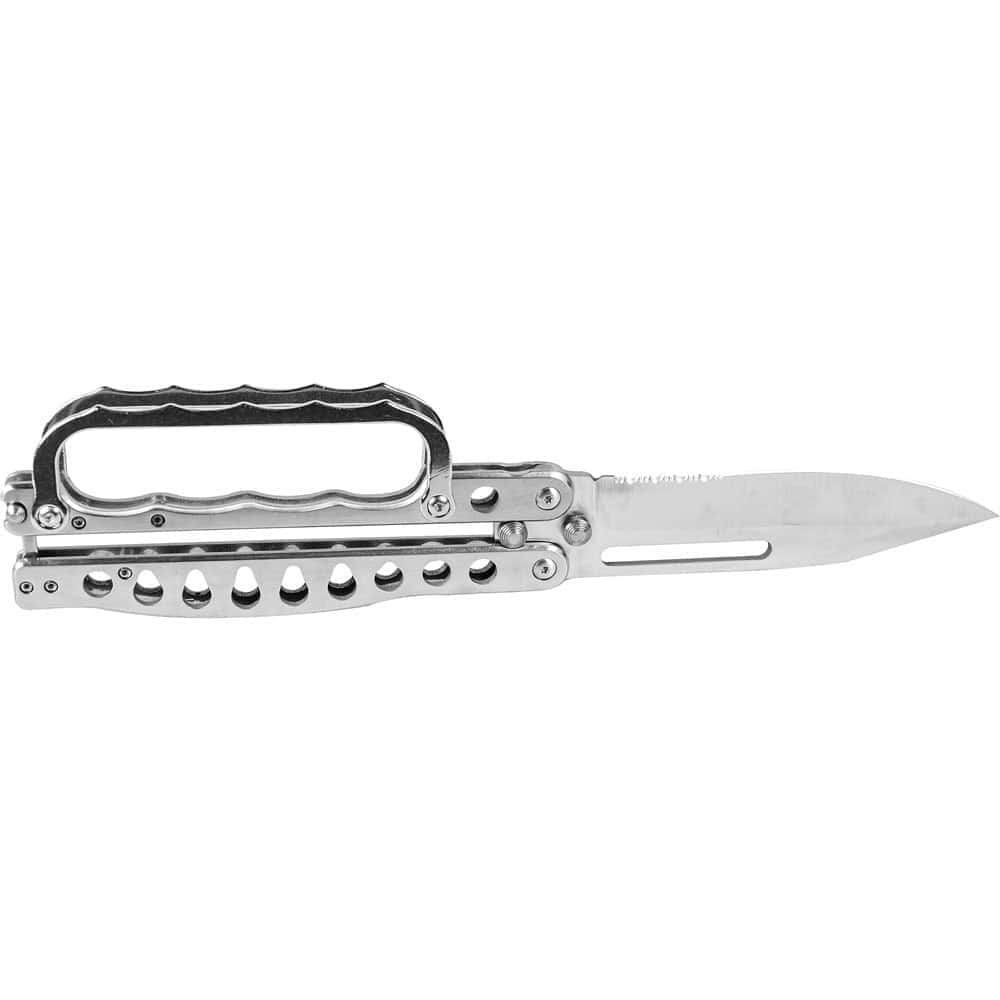
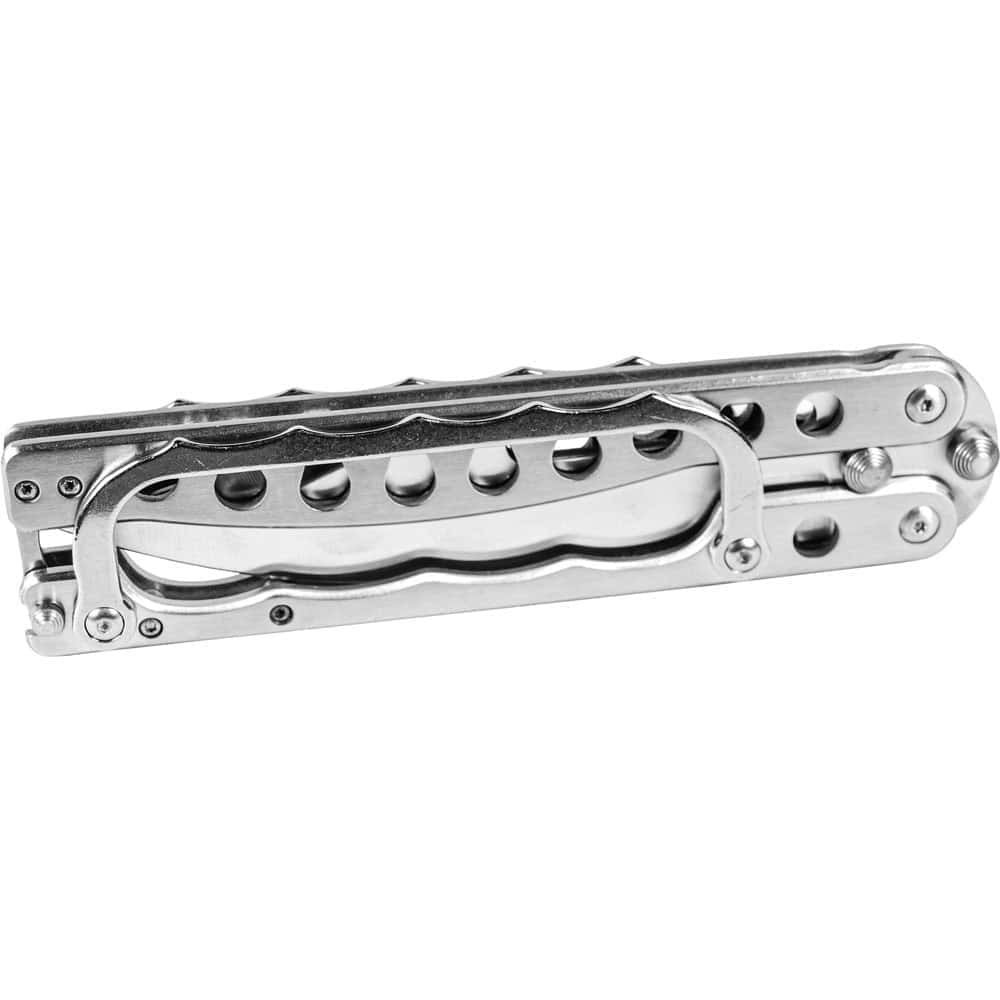
The knuckle guard is the distinctive feature: it screws onto the handle, gives you a more secure grip in demanding situations, and can be removed if you prefer the cleaner look of a standard butterfly handle. The latch keeps the handles safely closed when the knife is folded.
Who This Butterfly Knife Is For
This is a knife for someone who specifically wants a butterfly-style folder with serious construction and a full-size blade. At 11 inches open with a 5-inch serrated blade, it’s not a compact everyday carry option — it’s a substantial piece of cutlery built for people who want a balisong with real presence.
The removable knuckle guard makes it more versatile than it might look — carry it without the guard for a more traditional butterfly profile, or attach it when you want the additional grip security it provides. It’s a well-made example of a specific type of knife that collectors and enthusiasts tend to look for.
Is This the Right Choice for You?
Choose this knife if you want:
- A full-size butterfly knife with all-metal construction and real weight
- A 5-inch serrated blade for demanding cutting tasks
- A removable knuckle guard that adds grip security without being permanent
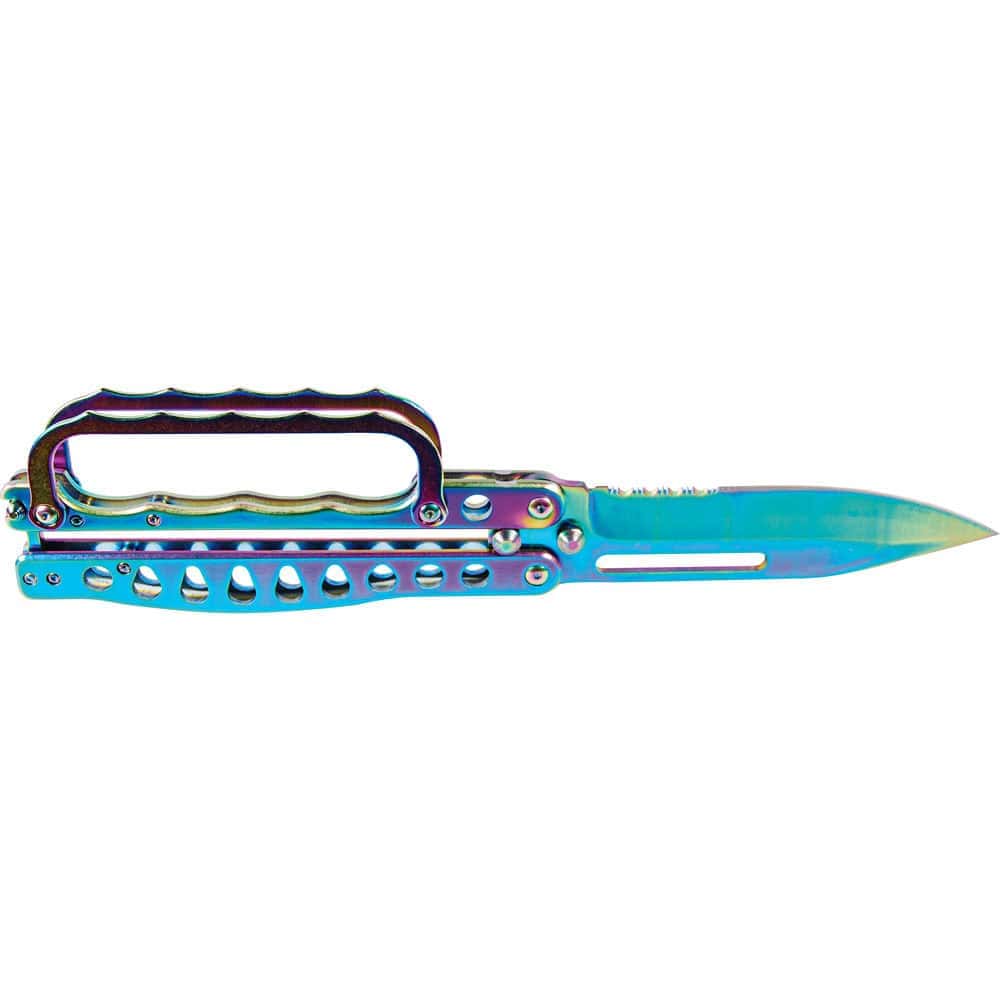
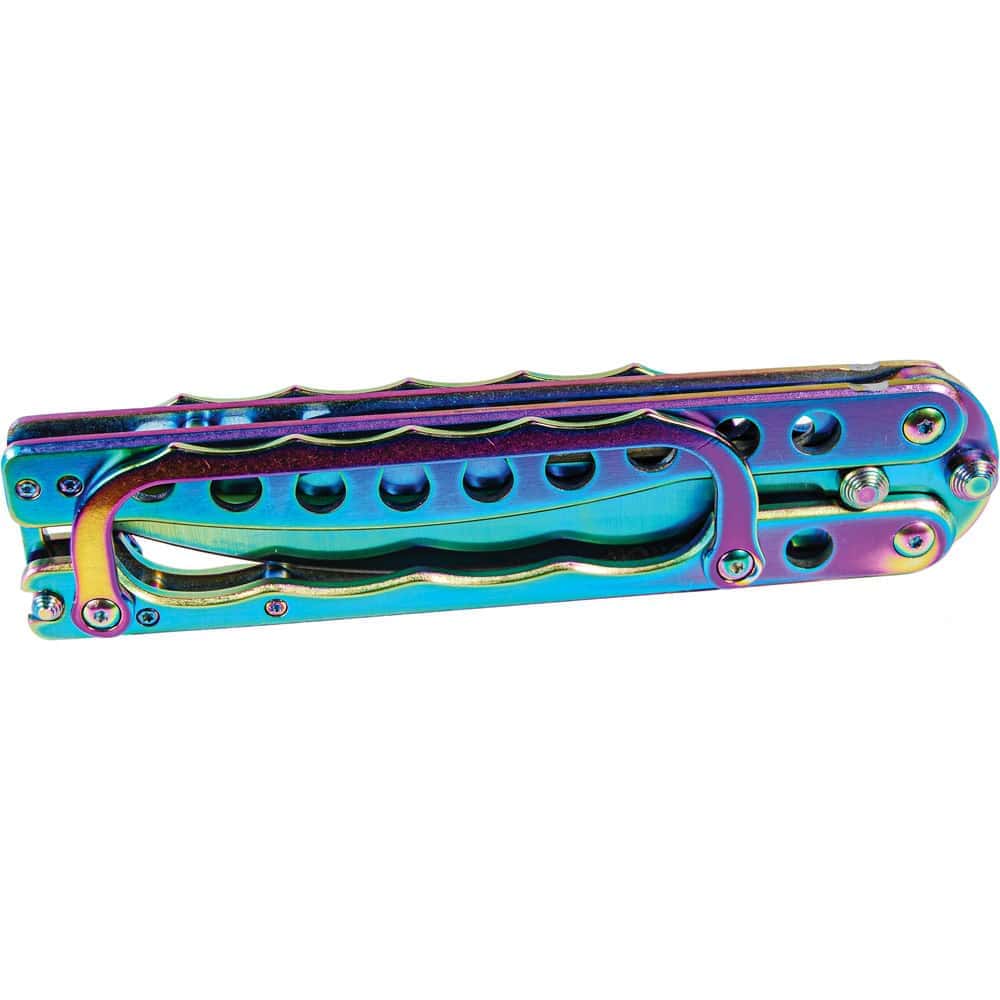
- Three finish options — Black, Plasma, or Stainless Steel
Consider something else if you need:
- A compact, lightweight everyday carry folder — this is a full-size, heavy piece at 0.7 lbs
- A plain-edge blade for precise slicing tasks where serration is a disadvantage
How It Actually Works
Butterfly knives — also called balisong knives — have two handles that rotate around the blade’s pivot, folding to enclose the blade for safe carry. The latch on this one secures the handles closed so it won’t open in a pocket or bag. Opening a butterfly knife takes a bit of practice, but the mechanism itself is straightforward once you get the motion down.
The serrated 5-inch stainless steel blade handles tough materials — heavy rope, thick strapping, dense fabric — better than a plain edge does. The all-metal construction means the handles won’t flex or crack under pressure, which is a common issue with lower-quality butterfly knives. At 0.7 lbs, this is noticeably heavier than most folding knives, which contributes to the solid feel but also means you’ll know it’s in your pocket or bag.
Quick Comparison: How Does This Butterfly Knife Stack Up?
| Feature |
Butterfly Trench Knife |
Standard Folding Knife |
Fixed Blade Knife |
Assisted Open Folder |
| Blade Length |
5 inches ✓ |
3–4 inches |
4–6 inches ✓ |
3–4 inches |
| Overall Open Length |
11 inches ✓ |
7–8.5 inches |
Fixed |
7–8.5 inches |
| Construction Weight |
Heavy/All-Metal ✓ |
Light–Medium |
Medium–Heavy ✓ |
Light–Medium |
| Opening Mechanism |
Balisong/Latch |
Manual |
Fixed ✓ |
Spring-assist ✓ |
| Knuckle Protection |
Optional ✓ |
None |
Guard on some ✓ |
None |
| Best For |
Collectors/enthusiasts |
Light EDC tasks |
Camp/field work |
Convenient EDC |
Practical Details
Overall length open is 11 inches. Blade length is 5 inches with serrated edge. Handle material is stainless steel. All-metal construction throughout. Knuckle guard is removable — screws on and off. Latch safety keeps handles closed for carry. Weighs approximately 0.7 lbs. Available in Black, Plasma, and Stainless Steel finishes. Important: Butterfly knives are restricted or illegal in many states and jurisdictions. Verify your local laws thoroughly before purchasing or carrying this knife.
A solidly built butterfly knife with all-metal construction, a removable knuckle guard, and a full 5-inch serrated blade — substantial and well-made for its category, with three finish options to choose from.
Frequently Asked Questions
Are butterfly knives legal to own and carry?
Butterfly knife laws vary significantly — some states prohibit them entirely, some allow ownership but restrict carry, and others have no specific restrictions. This is one of the more legally complicated knife types in the United States. Before purchasing, it’s essential to look up your specific state and local laws. Searching “[your state] butterfly knife laws” will get you to relevant legal sources. Don’t assume it’s legal to carry even if it’s legal to own — many jurisdictions treat those differently.
How does the removable knuckle guard work?
The knuckle guard is a metal piece that screws onto the handle of the knife. When attached, it provides a more secure grip by protecting the knuckles of your hand while you hold the knife. To remove it, unscrew it from the handle — it comes off cleanly and stores separately. The knife functions normally as a standard butterfly knife with or without the guard attached. The screw mechanism is designed for secure attachment during use but easy removal when you want a different look or profile.
What does “Plasma” finish mean on this knife?
The Plasma finish refers to a surface treatment applied to the blade and handle that gives them an iridescent, multicolor appearance — similar to a rainbow anodized finish. It’s a distinctive look that shows blues, purples, and golds depending on the angle and lighting. It’s purely cosmetic and doesn’t affect the blade’s performance or edge retention. If you want the most visually striking option of the three, Plasma is it. Black is the most understated, and Stainless Steel shows the raw metal finish.
Is a serrated blade harder to maintain than a plain edge?
Serrated blades do require different maintenance than plain-edge blades. You can’t sharpen them with a standard flat whetstone — you need a round or tapered sharpening rod that fits into the individual serrations. The upside is that serrated edges stay sharp longer for cutting fibrous materials like rope, strapping, and fabric, because the teeth do the work in a way that’s less likely to dull them. For occasional cleaning and touch-up sharpening, a ceramic rod or dedicated serration sharpener works well.








Reviews
There are no reviews yet.