Two Good Knives for Getting Started
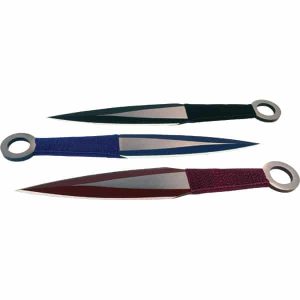
Knife throwing is a skill that takes repetition to develop. Having two knives in a set is practical for exactly that reason — you can throw one, throw the second, then retrieve both at once instead of walking back and forth after every single throw. It’s a small thing, but it makes practice sessions more efficient.
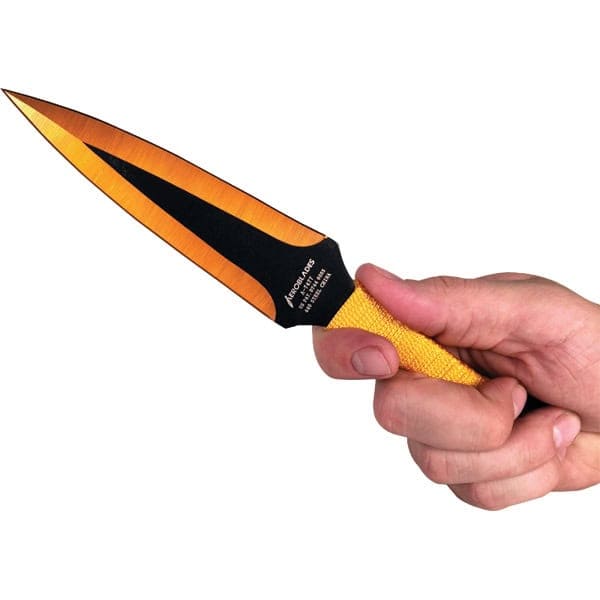
At 9 inches, these are on the larger end of beginner throwing knives, which actually works in your favor when you’re learning. Larger, heavier knives are more forgiving of small technique errors and tend to rotate more predictably than very short blades.
Who This Set Is For
This is a good fit for beginners who want a proper throwing knife rather than repurposing something else. The 440 steel and 9-inch length are both well-suited to learning the basics of no-spin and half-spin throwing techniques. If you’ve done some throwing before and want a spare set to leave at a practice target, these work for that too.
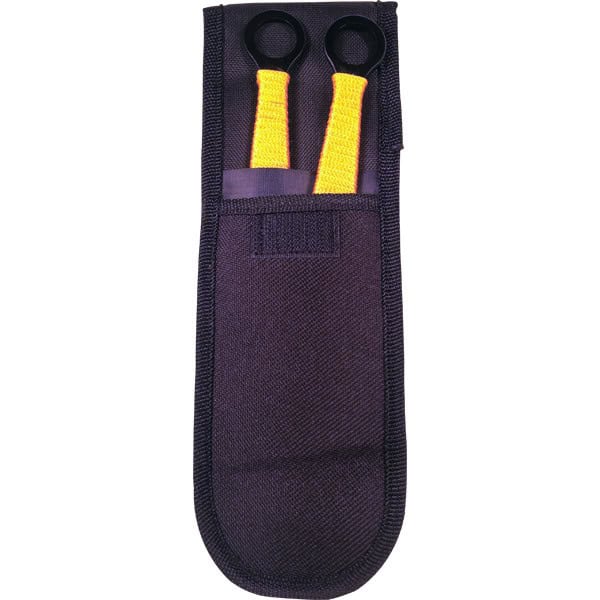
The included sheath pouch is a practical addition for anyone who takes these to a range, a friend’s property, or a dedicated practice spot. Both knives stay together and the sheath protects the edges during transport.
Is This the Right Choice for You?
Choose this throwing knife set if you want:
- A beginner-friendly size (9″) that’s forgiving while you develop technique
- A matched pair for uninterrupted practice sessions
- 440 steel construction that holds up to repeated impact
Consider something else if you need:
- A larger set — two knives may not be enough for serious practice volume
- A shorter, lighter blade for specific no-spin techniques
How They’re Built
440 stainless steel is a reliable choice for throwing knives. It’s hard enough to hold its shape after repeated impact with a wood target, and it resists the rust and corrosion that comes with outdoor use. These aren’t show pieces — they’re built to be thrown.
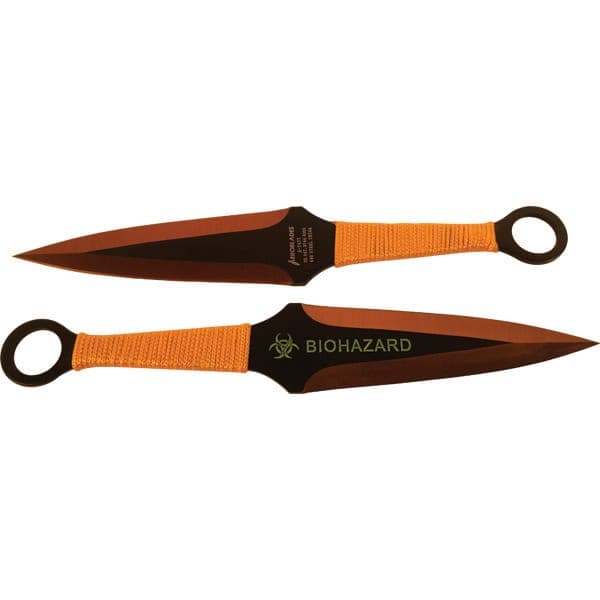
The black and gold BioHazard finish serves a practical purpose beyond appearance: the high-contrast design makes the knives easy to locate in a target board or on the ground, especially in lower light. At 0.7 lbs for the set, they have enough weight to carry well through rotation without being difficult to handle.
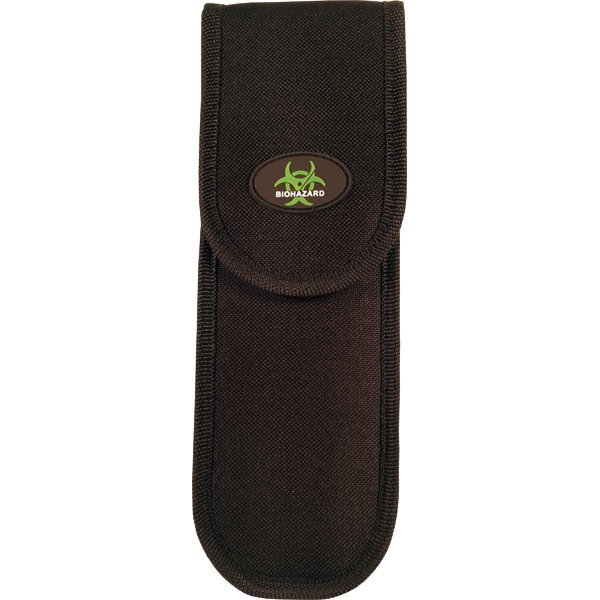
The nylon sheath pouch holds both knives securely. It’s not elaborate, but it does the job of keeping the blades contained for storage and transport.
Quick Comparison: How Does This Set Stack Up?
| Feature |
2-Piece 9″ Set (This) |
3-Piece 6.5″ Set |
Single Large Knife |
Professional Set (6+) |
| Blade Length |
9″ ✓ for beginners |
6.5″ |
9″–12″ |
Varies |
| Pieces in Set |
2 |
3 ✓ |
1 |
6+ ✓ |
| Steel |
440 stainless ✓ |
440 stainless ✓ |
Varies |
Varies |
| Includes Sheath |
Yes ✓ |
Yes ✓ |
Sometimes |
Usually ✓ |
| Best For |
Beginner/intermediate, larger blade feel |
Beginner, more throws per session |
Specific skill work |
Dedicated practice |
Practical Details
Set includes: 2 throwing knives, 1 nylon sheath pouch. Blade length: 9 inches. Dimensions: 9″ x 1.38″. Material: 440 stainless steel. Color: black with gold BioHazard design. Set weight: 0.7 lbs. Skill level: beginner to intermediate. As with any bladed tool, handle and store with appropriate care and keep out of reach of children.
Two 9-inch 440 steel throwing knives built for practice — the right size for learning, durable enough to keep throwing.
Frequently Asked Questions
What makes 9 inches a good length for beginners?
Longer, heavier throwing knives rotate more slowly and predictably, which gives beginners more margin for error in their release timing. Very short or light knives rotate quickly and require more precise technique to stick consistently. At 9 inches, these are forgiving enough for learning while still being properly balanced for throwing. Most instructors recommend starting with blades in the 9″–12″ range.
What kind of target should I use with these?
Softwood is the standard choice — pine and cedar boards work well, or a dedicated throwing target made from end-grain wood. The idea is that the blade can penetrate and stick without excessive force. Hardwood, plywood, and most composite materials won’t work well and can damage the blade tips. If you’re just starting out, a simple stack of pine 2x4s works fine.
Are these sharpened?
Throwing knives are typically not razor-sharp on the edge — the focus is on the tip for sticking into targets, not on a cutting edge. These have a functional edge but aren’t sharpened for cutting use. The tip is the important part for throwing. Handle with care regardless, as any steel blade can cause injury.
Is throwing the same two knives enough for practice, or do I need more?
Two knives is workable for casual practice, especially when you’re still learning. You throw one, walk up, retrieve both, walk back, and repeat. It slows the session down a bit compared to having four or six knives, but it’s not prohibitive for beginners. If you find yourself wanting longer uninterrupted throwing sessions, picking up a second set gives you four knives, which is a comfortable number for most practice setups.


Reviews
There are no reviews yet.