Entry Point Security That Doesn’t Require a Subscription or an Electrician
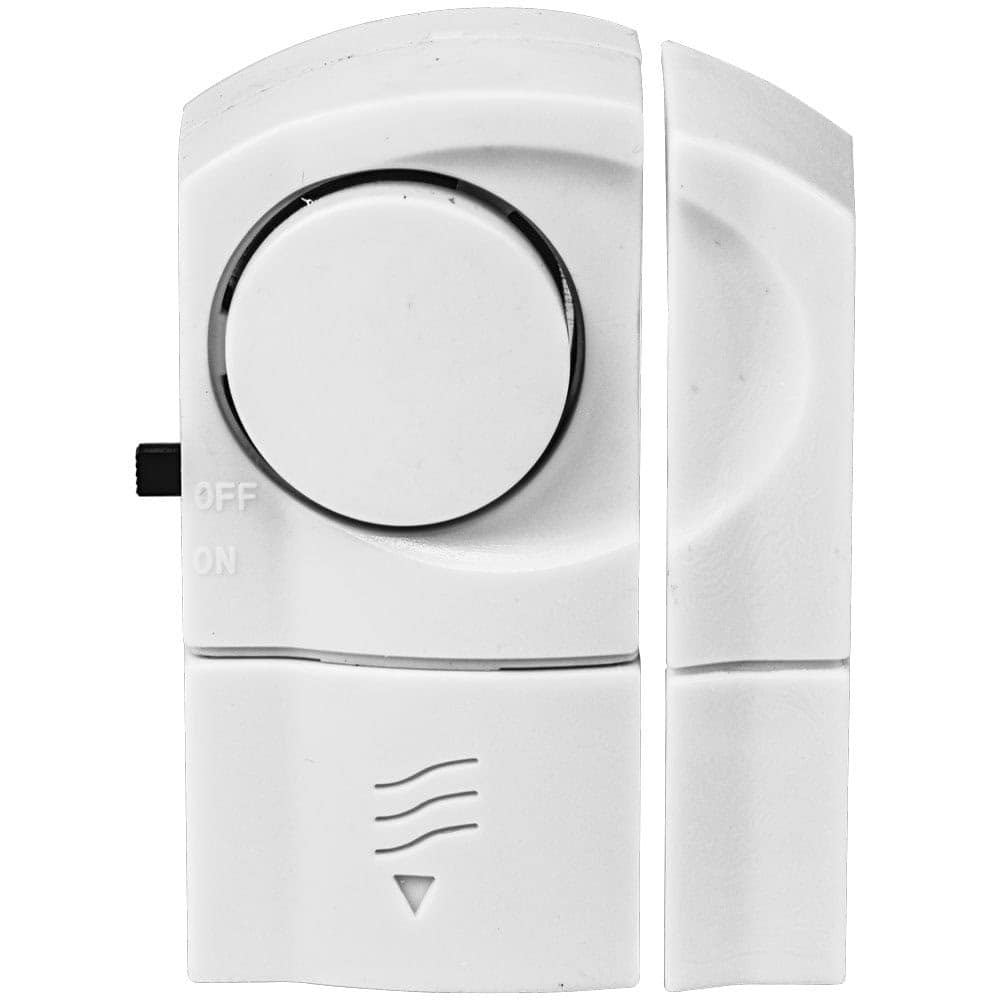
Magnetic contact alarms are one of those products where the simplicity is actually the point. There’s no hub to connect, no app to set up, no monthly fee. Two magnetic pieces stay close together when the entry is closed — the moment they separate because the door or window opens, the circuit breaks and the alarm sounds. It’s a reliable trigger method that’s been used in professional security systems for decades, just distilled down to something you can install yourself in a few minutes.
The built-in on/off switch is a practical detail worth noting. You can flip it off when you’re heading out, or when the kids need to open that window, without disabling the whole setup permanently. It’s a small thing, but it makes the alarm much more livable day-to-day.
Who This Magnetic Door and Window Alarm Is For
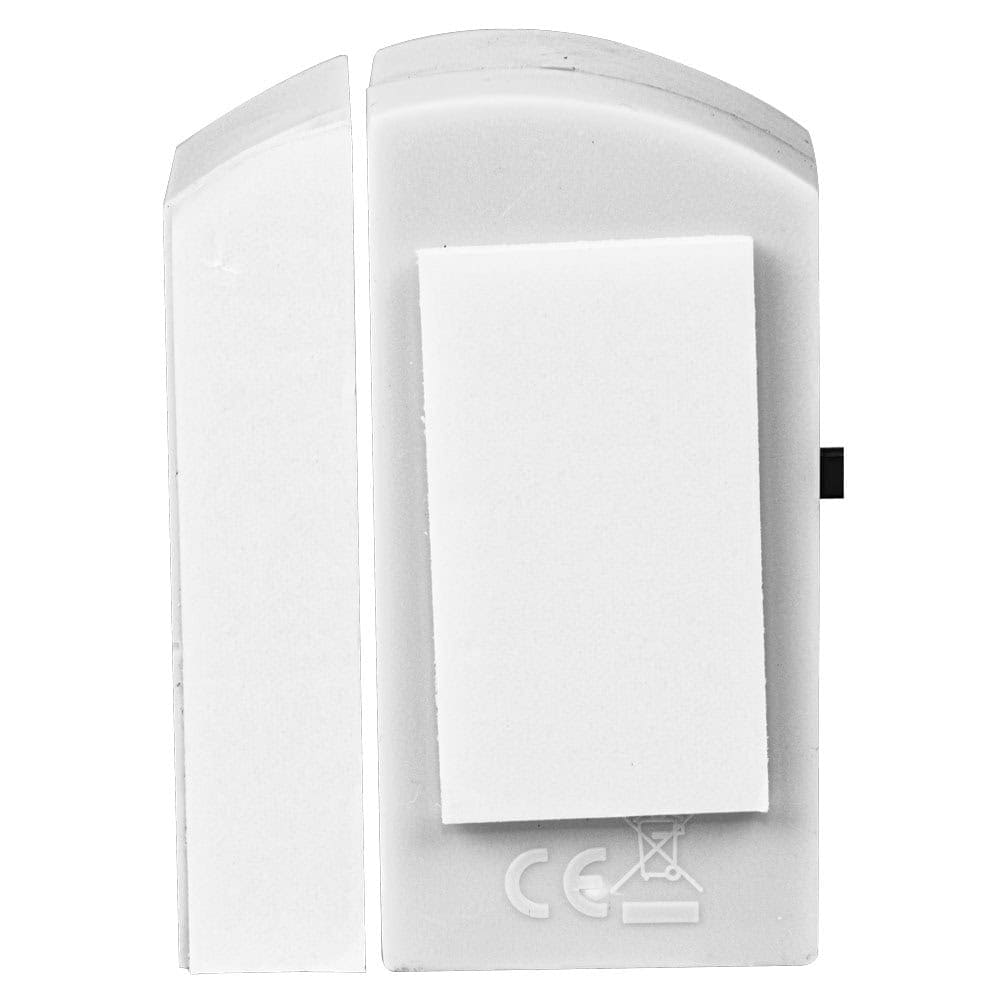
Renters who can’t modify door frames or window tracks will appreciate that these go on with adhesive — no screws, no drilling, and nothing that affects a security deposit. They’re easy to remove and take with you when you move.
Homeowners looking to add coverage to secondary entry points — basement doors, garage access doors, back windows — without expanding a full alarm system will find these fill the gap cleanly. They’re also popular for parents who want to know when a door to the backyard or pool area opens, since the alarm sounds immediately on separation.
Anyone in a shared living situation — a college apartment, a rented room — can put one of these on their door for basic privacy and entry notification without any complicated setup.
Is This the Right Choice for You?
Choose the Magnetic Door/Window Alarm if you want:
- Reliable trigger on any hinged door or window with no calibration required
- Renter-friendly adhesive installation with no permanent modifications
- An on/off switch so you can bypass the alarm when you need to
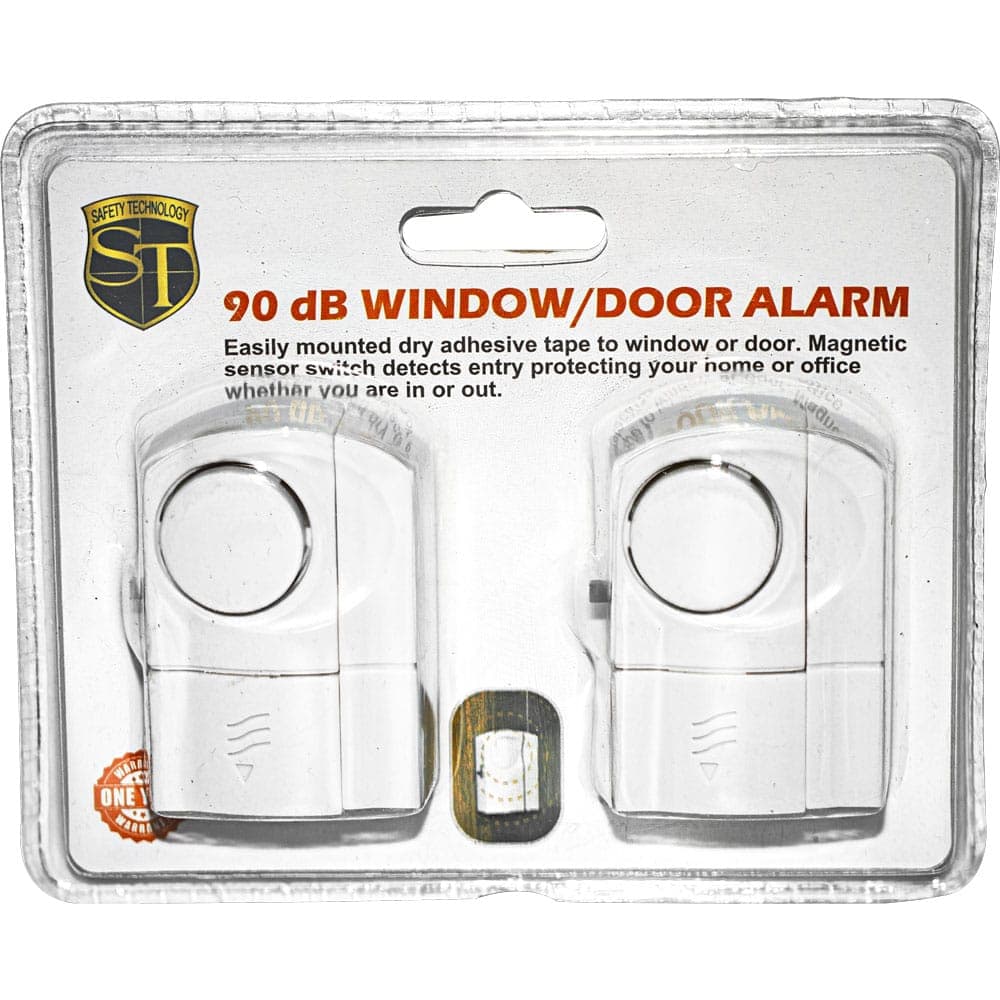
- Two entry points covered from a single purchase
Consider something else if you need:
- Coverage for windows where you want to detect impact before they’re opened — a glass break alarm is a better fit
- Wireless connectivity or alerts sent to your phone
How the Magnetic Sensor Works in Practice
The alarm comes in two pieces. One mounts on the stationary part — the door frame or window frame. The other mounts on the moving part — the door or window itself. When the two are close together, the magnetic circuit is closed and the alarm stays quiet. The instant they separate — when the door opens — the circuit breaks and the 90dB siren activates. That’s the whole mechanism, and it’s exactly why this type of alarm is so reliable. There’s nothing to wear out, nothing to drift out of calibration, nothing that false-triggers from humidity or air movement.
The on/off switch is on the sensor body. When you want to open the door yourself, flip it off first, open, flip it back on when you’re done. It takes a couple extra seconds and becomes second nature quickly. Batteries are the small LR44/AG13 button cell type and are included in the package.
Quick Comparison: How Does the Magnetic Door/Window Alarm Stack Up?
| Feature |
Magnetic Door/Window Alarm |
Glass Break Alarm |
Door Stop Alarm |
Security Camera |
| Trigger Type |
Magnetic separation ✓ |
Vibration on glass |
Door pressure/movement |
Motion or continuous |
| Installation |
Peel-and-stick ✓ |
Peel-and-stick ✓ |
No install needed ✓ |
Mount + wiring or WiFi |
| Renter-Friendly |
Yes ✓ |
Yes ✓ |
Yes ✓ |
Sometimes |
| Alarm Triggered |
Immediately on open ✓ |
On glass impact |
On door movement/pressure |
Records, may alert |
| Works on Sliding Doors |
Yes ✓ |
Yes |
Yes |
N/A |
| Best For |
Hinged doors, windows |
Glass windows and doors |
Hotel rooms, travel |
Visual monitoring, recording |
Practical Details
Each unit measures 2½” x 1¾” x ¾” and weighs 0.2 lbs. Power comes from three 1.5V LR44/AG13 button cell batteries, included in the package. The housing is white, fitting most door frames and window trim without standing out. Two units are included per purchase. Comes with a 1-year warranty from Safety Technology.
Two entry points, two alarms, ten minutes of installation — straightforward coverage that works every time the door opens when it shouldn’t.
Frequently Asked Questions
Can I use this on a sliding glass door, or only hinged doors?
Magnetic contact alarms work well on sliding doors — you’d mount one piece on the door frame and the other on the sliding panel itself. The key is making sure the two pieces align closely enough when the door is fully closed to maintain the magnetic connection. It’s worth taking a moment to position them carefully during installation. Most standard sliding door configurations work without any issues.
How do I open the door myself without setting off the alarm every time?
There’s a built-in on/off switch on each unit. Before you open the door, flip the switch to off. Open the door, do what you need to do, and switch it back to on when you’re done. It adds a second or two to the process and quickly becomes habit. If you find yourself going in and out frequently, you can leave it switched off during active hours and switch it back on at night.
Will the adhesive hold long-term on door frames and window trim?
The included adhesive backing works well on smooth, clean surfaces — painted wood, metal frames, and vinyl trim are all reliable. Rough, porous, or dusty surfaces hold less securely. Cleaning the mounting surface before application makes a noticeable difference. If you find the adhesive weakening over time, the units can also be mounted with small screws if you’re able to drill into the surface.
How loud is 90dB really — will it be heard from another room?
90dB is roughly equivalent to a lawnmower running nearby or a loud motorcycle passing at close range. In a typical home, it will be clearly audible from one or two rooms away, and from outside the building if windows are open. It’s not quite as loud as the 100dB glass break alarm, but it’s well within the range that draws attention and creates an effective deterrent. For most residential applications, 90dB is more than sufficient.


Reviews
There are no reviews yet.