OTF Deployment: Fast Out, Fast Back In
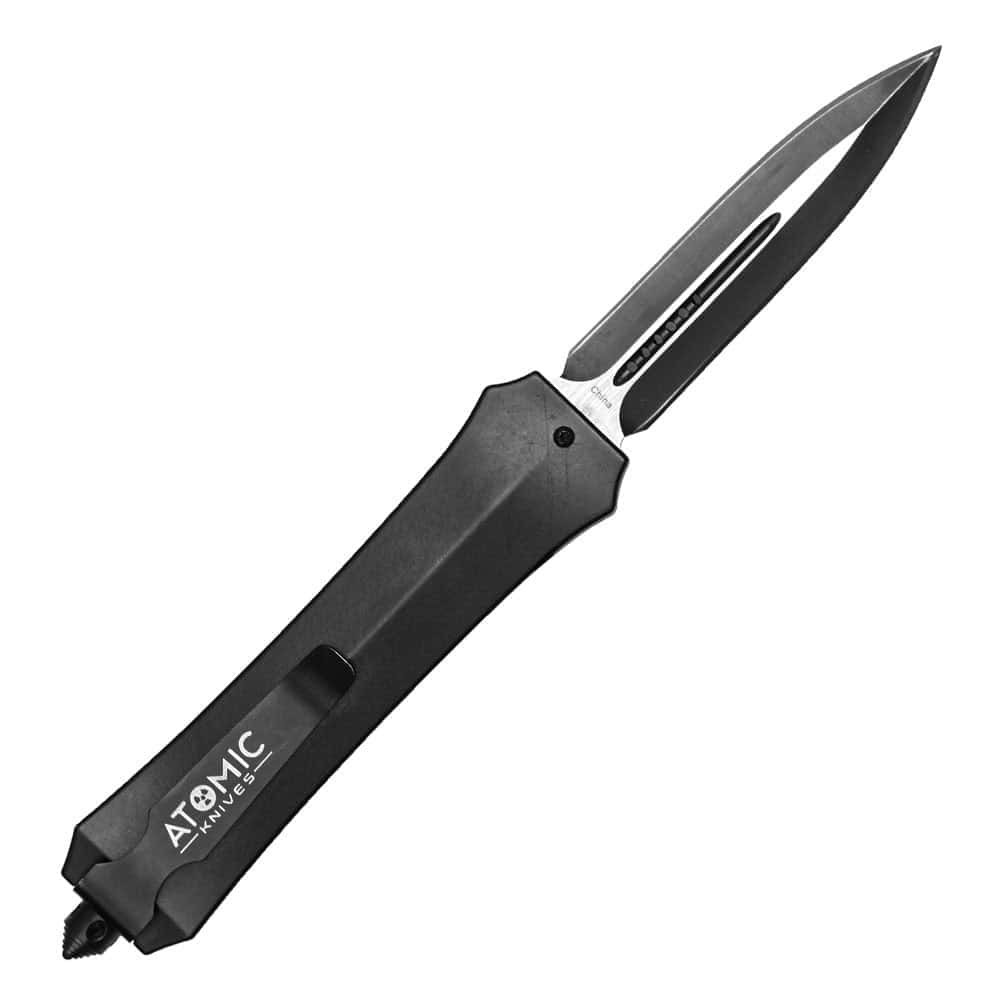
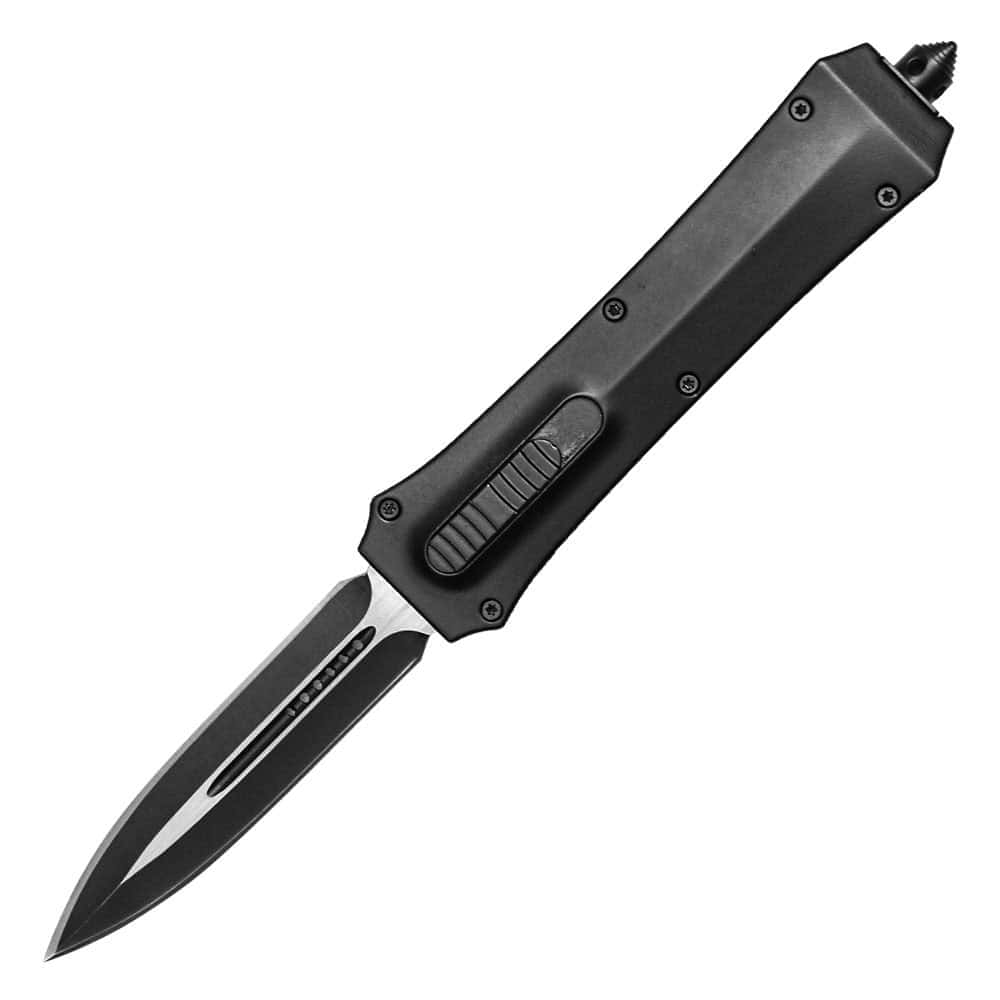
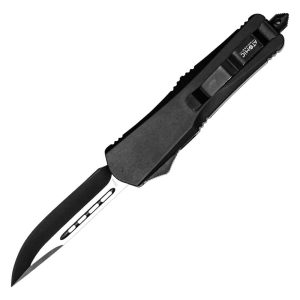
The defining feature of an OTF knife is how it works: push the slide forward, blade shoots out the front. Push it back, blade retracts. There’s no side swing, no rotation — it’s a straight linear action. This double-edge version pairs that mechanism with a 3.75-inch blade made from premium steel. If you’ve been looking at OTF knives for a while, you know what makes a good one — consistent deployment, clean retraction, and a blade that holds up. This one delivers on all three.
Who This OTF Knife Is For
OTF knives attract a specific kind of buyer — someone who’s specifically interested in the deployment mechanism, whether for collection purposes, everyday carry, or utility use in situations where one-handed operation and speed matter. This isn’t a beginner’s first knife purchase; it’s for someone who’s already familiar with automatic knives and wants the OTF style.
It’s also worth considering if you carry in situations where a side-opening knife feels awkward — the OTF action keeps the knife profile consistent and doesn’t require lateral clearance to deploy. Collectors who appreciate the engineering of the OTF mechanism will find this a solid entry point at a reasonable price. As always with automatic knives, check your local laws before purchasing.
Is This the Right Choice for You?
Choose this OTF knife if you want:
- The straight-out-the-front deployment style specifically
- A double-edge blade for the OTF format
- Fast, consistent deployment and retraction in one motion
- A larger OTF knife with a 3.75-inch blade
Consider something else if you need:
- A single-edge blade — see the OTF single-edge version (ID 21835)
- A more compact carry — side-opening automatics collapse shorter
- Fewer legal complications — manual folders are generally less restricted
How It Actually Works
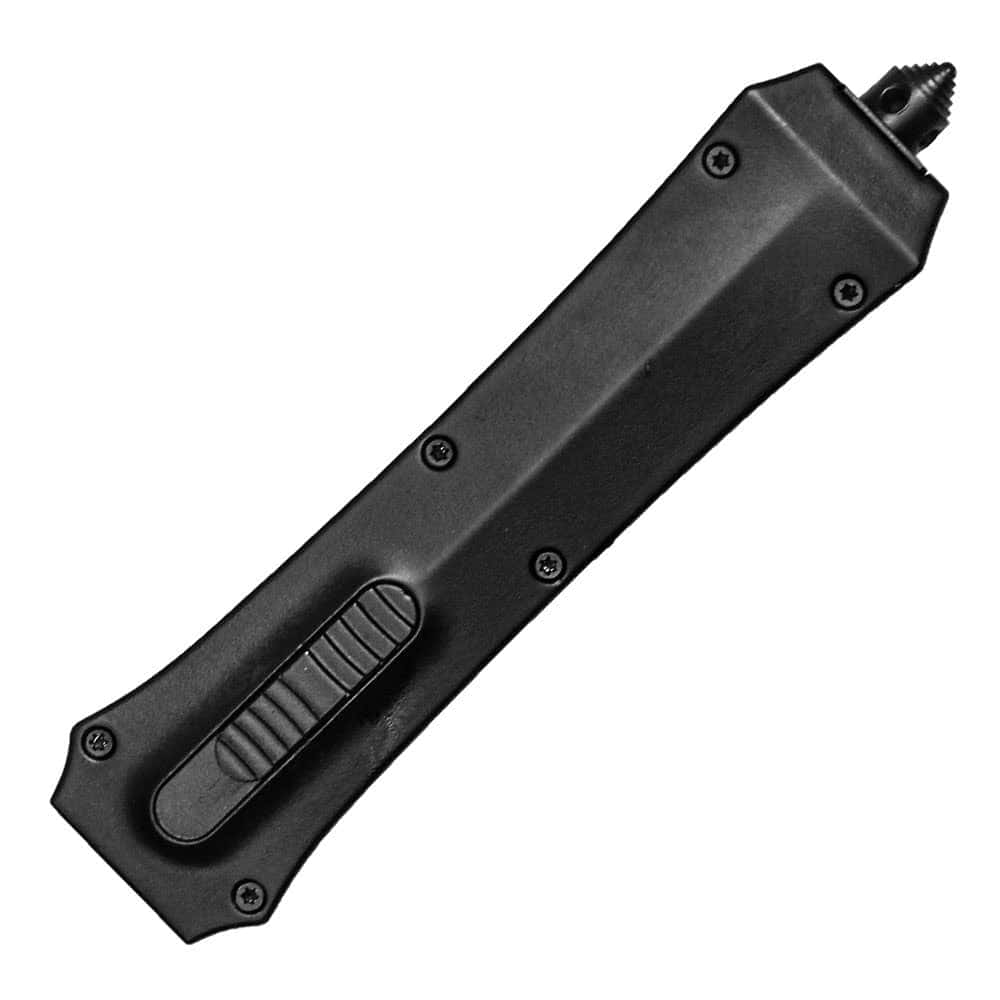
OTF stands for “out the front” — which describes exactly how the blade deploys. A slide on the spine of the handle controls everything: push it one direction to deploy, push it the other direction to retract. The blade travels straight forward through a channel in the handle rather than rotating out from the side. The double-edge design means both edges of the blade are sharpened, which is a meaningful distinction from a single-edge OTF.
The mechanism on this knife is described as lightning-fast, and OTF knives in general are known for their snappy deployment. What you want in a quality OTF is a blade that locks solidly in the open position with no wobble, and retracts cleanly without resistance. The premium steel blade at 3.75 inches gives you enough working length for utility tasks while keeping the overall collapsed length at a manageable 5.75 inches.
At 0.7 lbs, this is noticeably heavier than the side-opening knives — the OTF mechanism adds some internal complexity and weight. That’s a real trade-off worth knowing upfront.
Quick Comparison: How Does This OTF Knife Stack Up?
| Feature |
This OTF Double Edge |
OTF Single Edge |
Side-Opening Automatic |
Manual Folding Knife |
| Deployment Style |
Out-the-front ✓ |
Out-the-front ✓ |
Side rotation |
Manual rotation |
| Blade Edges |
Double edge ✓ |
Single edge |
Single edge |
Single edge |
| Blade Length |
3.75 inches ✓ |
3.5 inches |
3.5 inches |
Varies |
| Collapsed Length |
5.75 inches |
5.5 inches |
4.5 inches ✓ |
Varies ✓ |
| Weight |
0.7 lbs |
0.7 lbs |
0.4 lbs ✓ |
Varies ✓ |
| Best For |
OTF carry, double edge |
OTF carry, easier sharpening |
Lighter EDC |
General utility, fewer restrictions |
Practical Details
Overall length: 9.5 inches open, 5.75 inches collapsed. Blade: 3.75 inches, double edge, premium steel. Weight: 0.7 lbs. Dimensions: 9.5″ x 1.38″. Color: black. Important: OTF automatic knives carry the same legal restrictions as other automatic knives — check your state and local laws before purchasing. Regulations on automatic knives vary significantly by location.
A well-built OTF knife with fast, reliable deployment and a double-edge blade — for buyers who know what they’re looking for and want a quality option at a reasonable price.
Frequently Asked Questions
What makes an OTF knife different from a regular automatic knife?
A regular automatic (side-opening) knife deploys by rotating the blade out from the side of the handle, like a very fast folder. An OTF knife deploys differently — the blade travels straight forward out of the tip of the handle and retracts back in the same way. The mechanism is more complex internally, which is why OTF knives tend to weigh a bit more and cost more. The appeal is the compact, linear action and the fact that deployment doesn’t require any lateral clearance.
Is a double-edge blade a problem for everyday carry?
That depends on your intended use. A double-edge blade means both sides are sharpened, which has some utility applications but also adds legal considerations in some areas — certain jurisdictions specifically restrict double-edge blades. For utility tasks like cutting rope or food prep, a single edge is often more practical. If you’re buying specifically for the double-edge feature, make sure it’s legal in your area.
How do I retract the blade on an OTF knife?
The same slide mechanism that deploys the blade also retracts it. Push the slide forward to deploy, pull it back to retract. The blade travels back into the handle through the same channel it came out of. On a well-made OTF, this action should be smooth in both directions. If retraction ever feels stiff, check that there’s no debris in the channel and apply a small amount of appropriate lubricant if needed.
Are OTF knives legal in my state?
OTF knives fall under the same automatic knife (switchblade) laws as side-opening automatics in most jurisdictions. Some states allow them freely, others restrict blade length or prohibit automatic knives for civilian carry entirely. A few states have specific provisions for OTF knives. The safest approach is to look up your specific state’s knife laws and any applicable local ordinances before ordering — this information is usually easy to find online.

Reviews
There are no reviews yet.